Relating to dyslexia

Albert Einstein - Dyslexic and most recognized and well-known scientists

I was reading wired.com’s post about Dyslexia from a while ago and it almost had me in tears on the tube today. Why? Because I related to so much of it, it was freaky.

Interconnected reasoning is another kind of strength. These connections can be relationships of likeness — analogies for example — or causal relationships, or the ability to shift perspective and view an object or event from multiple perspectives, or the ability to see the “gist” or big-picture context surrounding an event or idea. Many dyslexics work in highly interdisciplinary fields or fields that require combining perspectives and techniques gained from different disciplines or backgrounds. Or they’re multiple specialists, or their work history is unusually varied. Often these individuals draw the comment that they can see connections that other people haven’t seen before.

This is one of my biggest things. I see the world in a connected way (for example the post about the singularity and diversity) and I find it hard to explain to others but in my head it makes sense. The tools I’m told to use limit me and drive me insane (don’t get me started on having to separate my life and manage two calendars, thankfully I opted out of that crap)

Here comes one of those connections… I have been looking for a way to do collaborative mindmapping. I love google docs but a document is sometimes limiting. I have looked around and found quite a few commercial mindmapping tools but then I found mindmup which is open source. And with some experimentation the other day, I got it working with Google Drive in a realtime collaborative way. Expect more mind maps in the future now.

But back to that post…

Wired: Would you want to be dyslexic if you could choose to be?
Brock: Absolutely! It’s a phenomenal kind of wiring.

This one really got me. For all the people telling me I’m doing it wrong, correcting my writing, etc, etc… Its made me a stronger person. A person with a super strong personality, self confident about my own ability and weaknesses. I have to admit even with the hard time I got at home and at school, I wouldn’t change a thing. Its part of who I am, and I can’t imagine not being dyslexic.

I luckily grew up in the technological revolution meaning I could cope through reliance on technology. If I was a generation earlier, it would be a different story.

I do wonder what difference it would have made if I had been correctly diagnosed in junior school? Rather that 10 years later while doing my dissertation at Ravensbourne. The test of half a day was intense but finally the results were posted to me later and as I always knew, I was pretty badly dyslexic.

I’ll be keeping an eye on dyslexicadvantage as I’d certainly like to improve on my already quite unique skillset.

CES 2013: Internet of Everything

CES this year seemed to be a fascinating one… mainly because the internet of things really broke through this year.

No longer just an expression used when people are talking about items they don’t understand, oh no were talking serious business at long last.

However there was also the ugly… Summed up by Qualcomm’s keynote, covered by the verge and many others…

A night of cringeworthy conversations, product demos, and music

But back to the good… This was certainly the year ioT went big and forbes have a nice summary,

Other than Ulta HDTVs, running $20,000 and up, there was no particularly brand new technology announcement that screamed “I am the future” but the sum of the parts screamed “Wow… this Internet thing has opened the door for a generation of products that no one could have imagined.”

Welcome to Love in the Time of Algorithms

Imran sent me a link to this book titled Love in the time of algorithms which instantly I instantly liked…

Love in the time of algorithms

The description is exactly what I would write if I was to publish my own thoughts instead of talking about it and doing it. Actually this post pretty much sums up what I think the book is going to cover

“If online dating can blunt the emotional pain of separation, if adults can afford to be increasingly demanding about what they want from a relationship, the effect of online dating seems positive. But what if it’s also the case that the prospect of finding an ever more compatible mate with the click of a mouse means a future of relationship instability, a paradox of choice that keeps us chasing the illusive bunny around the dating track?”
 
It’s the mother of all search problems: how to find a spouse, a mate, a date. The escalating marriage age and declin­ing marriage rate mean we’re spending a greater portion of our lives unattached, searching for love well into our thirties and forties.
It’s no wonder that a third of America’s 90 million singles are turning to dating Web sites. Once considered the realm of the lonely and desperate, sites like eHarmony, Match, OkCupid, and Plenty of Fish have been embraced by pretty much every demographic. Thanks to the increasingly efficient algorithms that power these sites, dating has been transformed from a daunting transaction based on scarcity to one in which the possibilities are almost endless. Now anyone—young, old, straight, gay, and even married—can search for exactly what they want, connect with more people, and get more information about those people than ever before.
As journalist Dan Slater shows, online dating is changing society in more profound ways than we imagine. He explores how these new technologies, by altering our perception of what’s possible, are reconditioning our feelings about commitment and challenging the traditional paradigm of adult life.
Like the sexual revolution of the 1960s and ’70s, the digital revolution is forcing us to ask new questions about what constitutes “normal”: Why should we settle for someone who falls short of our expectations if there are thousands of other options just a click away? Can commitment thrive in a world of unlimited choice? Can chemistry really be quantified by math geeks? As one of Slater’s subjects wonders, “What’s the etiquette here?”
Blending history, psychology, and interviews with site creators and users, Slater takes readers behind the scenes of a fascinating business. Dating sites capitalize on our quest for love, but how do their creators’ ideas about profits, morality, and the nature of desire shape the virtual worlds they’ve created for us? Should we trust an industry whose revenue model benefits from our avoiding monogamy?
Documenting the untold story of the online-dating industry’s rise from ignominy to ubiquity—beginning with its early days as “computer dating” at Harvard in 1965—Slater offers a lively, entertaining, and thought provoking account of how we have, for better and worse, embraced technology in the most intimate aspect of our lives.

Its not available till Aug 15th but is available to pre-order if you so wish…

I’ll be keeping an eye out for this one and hopefully if Dan does a book tour or something I can rope him into doing something in Manchester which has the 2nd biggest singles population in the UK behind London. Maybe it can be a special #smc_mcr event or maybe a return to prestonsocial with something more solid?

The obvious thing would be to do a relationships 2.0?

Its not the first time I’ve seen Dan’s name come up, he wrote this critical piece about dating algorithms. Which is one of the pieces,  which got me thinking about dating sites and are they actually doing what they claim to be doing? His articles reads similar to my own blog if you go by the titles alone. Just need Onlinedatingpost and Datinginsider for a full house? Anyone know how to contact any of these people?

Some interesting trends…

Internet Fundamentals

The ever lasting effect of the Internet on Television, or as I call it the TV post Internet.

See Eric Schmidt’s Edinburgh Festival Keynote which can be read in full on PaidContent.

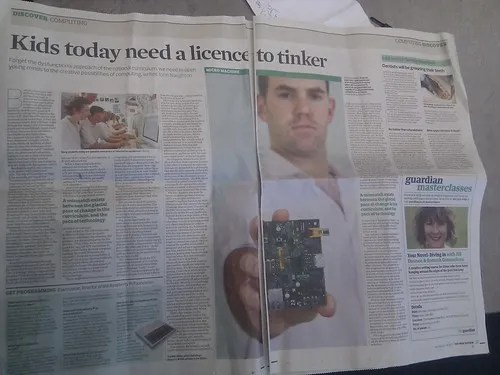
Kids need licence to tinker

The concept and idea of a BBC Micro for the 21st Century, which some are saying could be the Raspberry Pi.

Been thinking about this stuff deeply recently for work and what I’ll be doing in the near future… You might be interested in some of the Top10’s I’ve been creating on top10.co